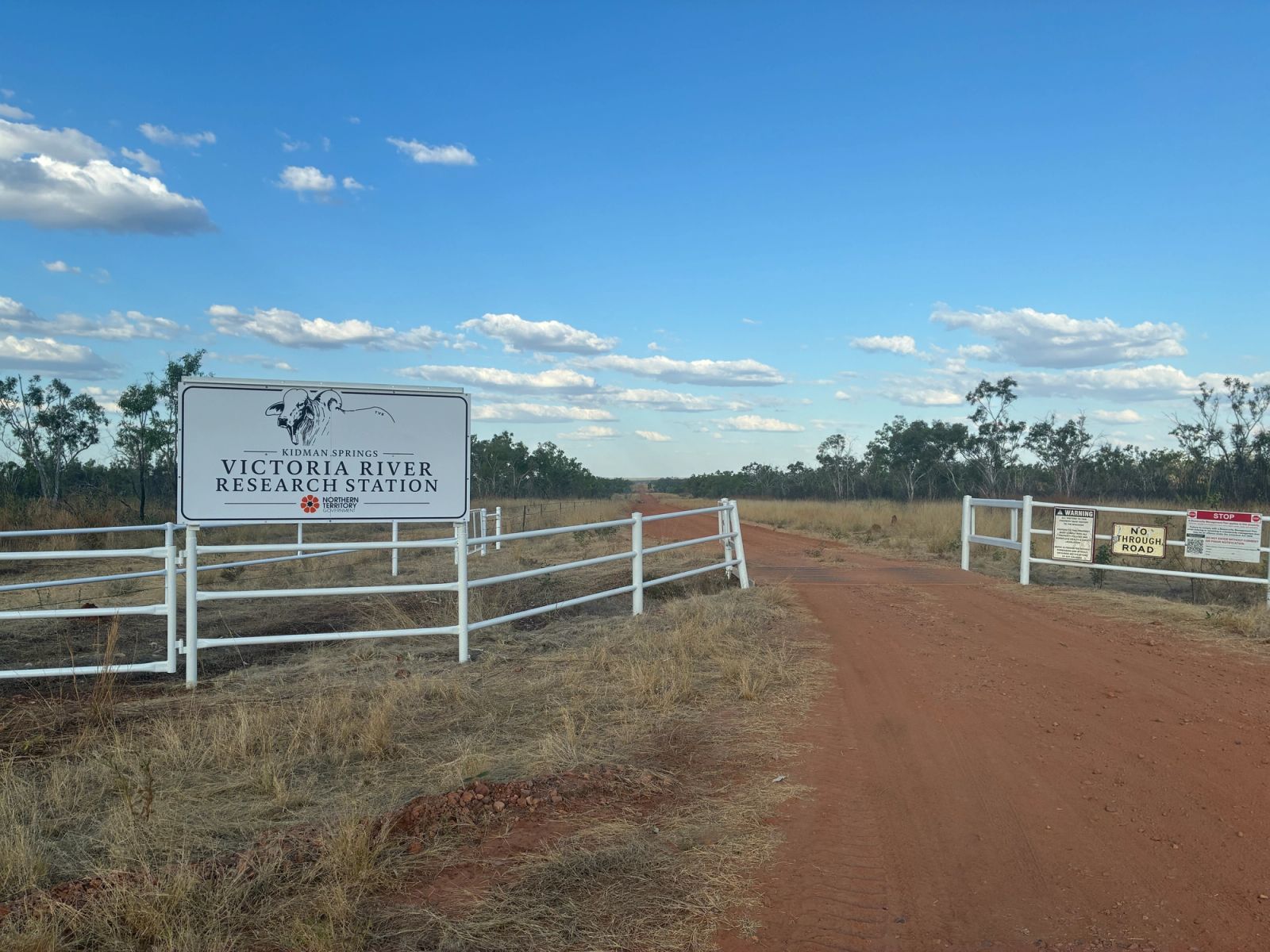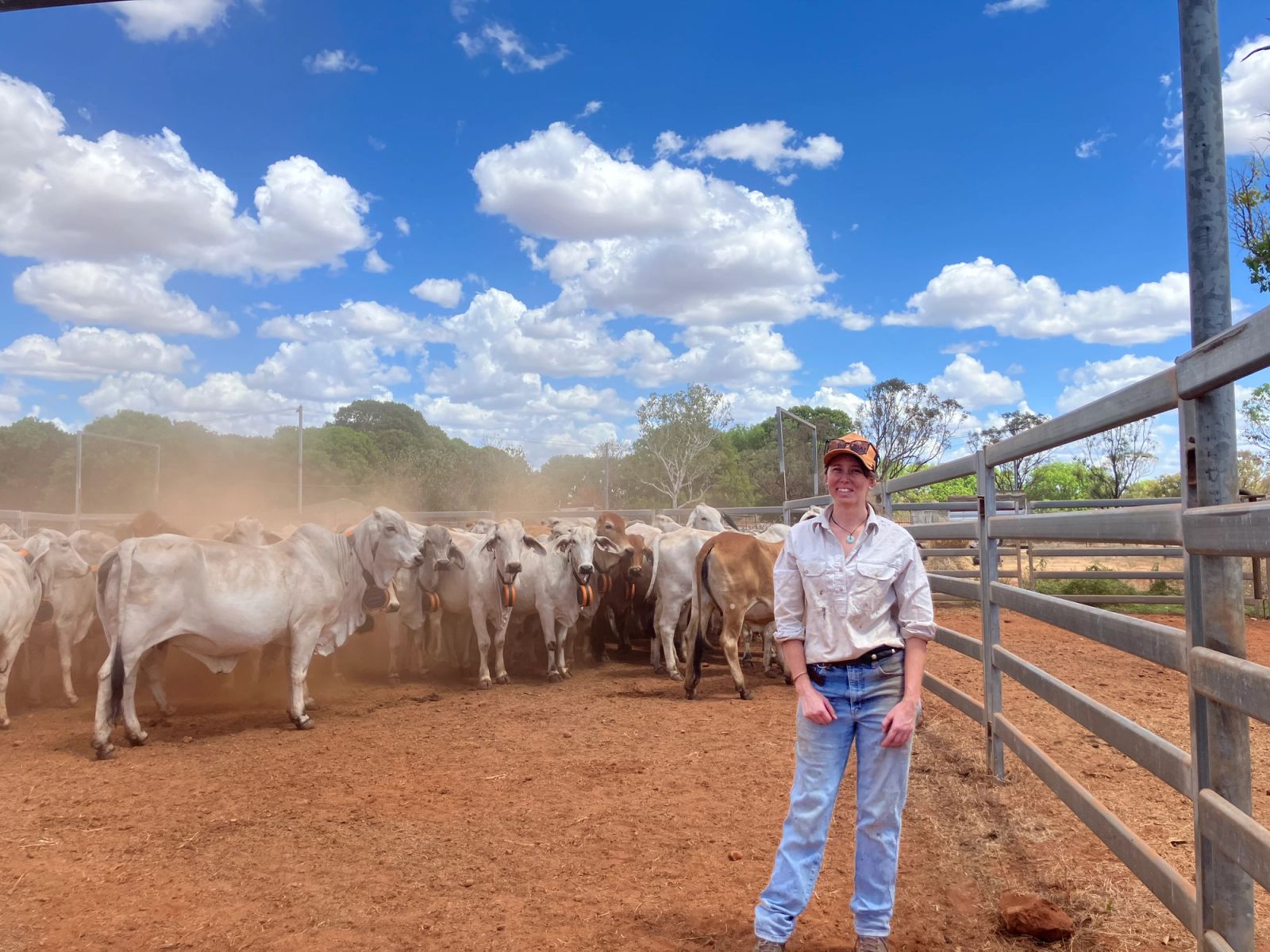

Hannah Cummings’ PhD project is based at the Katherine Rural Campus (CDU), seeking to answer some of the industry’s most pressing questions about virtual fencing in cow-calf systems.
Hannah has done it all, from contract mustering and station work in the North, to more in between. She went south to study her undergraduate degree in Animal Science at the University of Adelaide and then moved into the cattle feedlot space, working her way up to livestock manager while beginning her Honours in Enrichment for Beef Cattle in Feedlots.
After completing that research, something shifted for Hannah.
“That work was sort of like a tipping point for me, where I realised how passionate I am about welfare and behaviour for beef cattle,” she says.
Pairing that with her love of northern beef production systems from her experience, Hannah’s next endeavour began to take shape.
When the opportunity came up to research virtual fencing in the north, specifically maternal behaviour and welfare in cow-calf systems, it felt perfect.
“It was almost like the dream project for me,” Hannah says. “Northern beef, being back up north. It was really amazing to see Virtual Fence technology taking shape in the north.” She applied and was successful.
Cow-calf systems introduce a new layer of complexity for virtual fencing, particularly in Northern Australia, where cows and calves stay together for six to eighteen months. Virtual fencing has been well proven in general grazing operations, but researchers are now asking how cows might manage calving while wearing a neckband, how neckbands should be sized, how mother and calf reunite after separation, and how a cow-calf unit might respond to a virtual boundary if the mother is virtually fenced and the calf is not. All questions that are relatively new to the industry.
There is also a production angle of virtual fencing in the cow-calf situation. A calf wandering off for grazing is ideal for growth, but if virtual fencing is being used to protect a culturally significant site or exclude stock from a sensitive area, not knowing how a calf interacts with a boundary it can’t see becomes challenging. Understanding whether a calf will ignore the fence, respect it or something in between is important for getting exclusion zones right.
Hannah’s first trial consists of an efficacy study designed to test the methodologies and the system itself. The study began in August and will run for four to five months at the Katherine Rural Campus of Charles Darwin University, a working commercial station just north of Katherine. The trial will involve about 100 commercial cows, which is a smaller herd than the typical 300 to 500 in that area.
As a part of her PhD, Hannah is set to gain exposure to Gallagher’s commercial and technical side over time, including 60 days out in the field across industry roadshows, field days, and conferences.
For eShepherd, Hannah’s research carries significance well beyond the university campus.
Mark Dempsey, Gallagher Business Development Manager based in Australia, says, "Hannah's work is going to directly shape how we understand and improve our own technology in cow-calf situations. We're excited about what her findings will mean for not only us, but the industry too. It’s exciting to be a part of her journey to get there."
As virtual fencing continues to expand, Hannah’s research is set to help fill a critical gap, ensuring the technology works not just for the herd, but for cows and calves together.