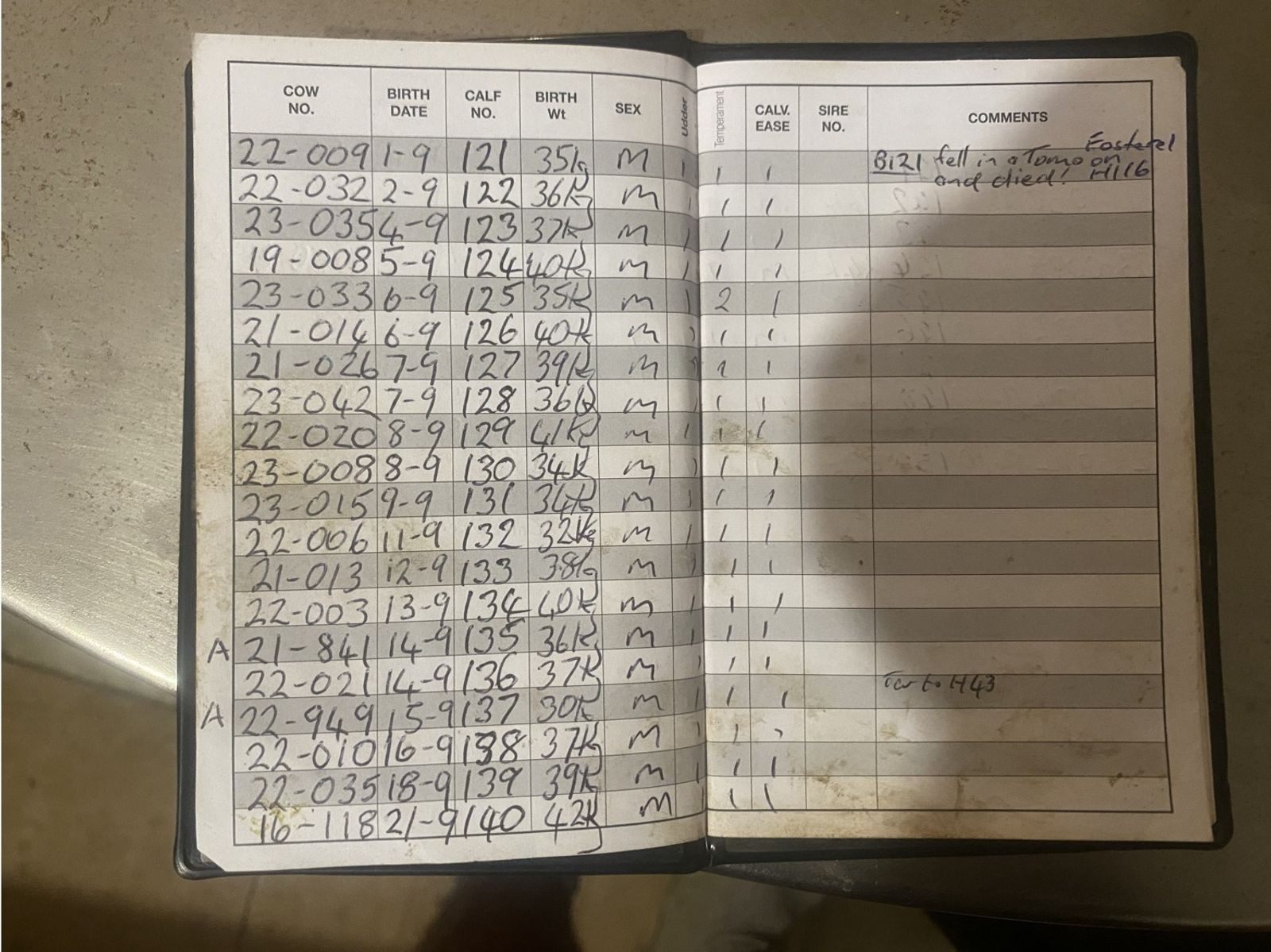
The calf book lives in the ute or on the dash. Perfect at the yards. Useless six months later when the vet asks a question you used to know.
You can't sort it. You can't filter by sire to see which bull is throwing the lighter calves. You can't tally a cow's lifetime calves without flipping through five seasons. And if it gets soaked or left on the bike, you're done.
The fix: one photo, one prompt, one spreadsheet back.
What you need
A phone, the free ChatGPT or Claude app, and the paper book. No subscription needed for a few pages.
The three steps
- Photograph the page. Open the book flat under good light, get the whole spread in frame, square to the page, focus locked.
- Upload it and ask. In the ChatGPT or Claude app, attach the photo and type "Put this page into an Excel spreadsheet."
- Wait a few seconds. The model reads the page, builds the same table you wrote by hand, and offers a downloadable file.
What comes back is a clean digital copy. Same columns, same row order, with any cell the model couldn't read flagged as [?] rather than silently guessed.
What it looks like in practice

The starting point is the photo of the calf book above and one line of prompt. Attach the page, type "Put this page entry into an excel spreadsheet," and send.
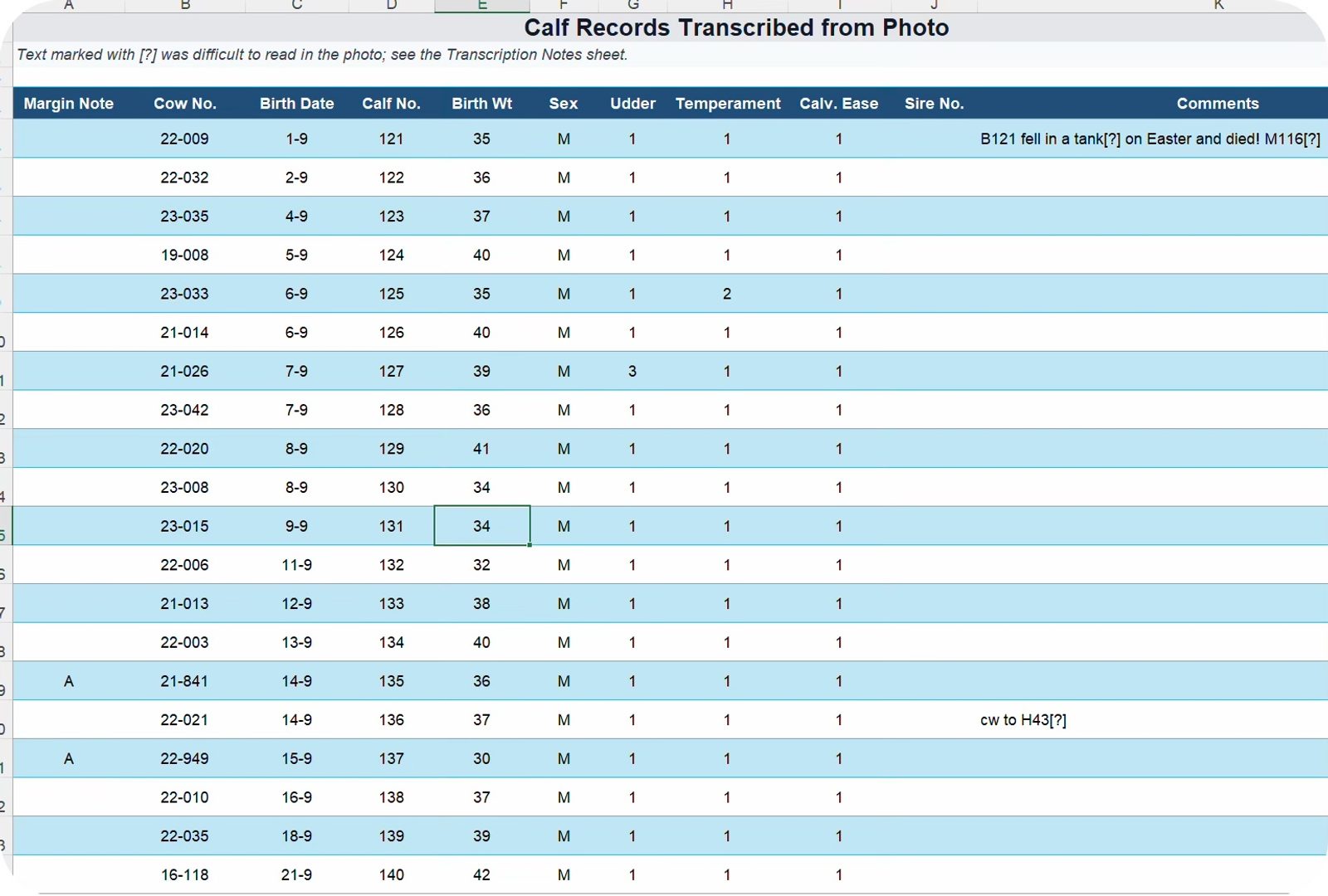
A few seconds later, a clean table comes back. It keeps every column from the page (cow number, birth date, calf number, birth weight, sex, udder, temperament, calving ease, sire, comments), lifts the margin "A" against the adopted calves into a "Margin Note" column of its own, and flags cells like "B121 fell in a tank[?]" or "cw to H43[?]" instead of guessing. The header at the top tells you which cells to spot-check against the original.
What else this works for
- Mating records. Paddock cards turned into a herd table you can filter by bull.
- Drench programmes. Last drench date and product per mob, ready to graph against weight gain.
- Animal health treatments. Withhold periods and vet notes off the back of a fertiliser bag.
- Pasture covers. Plate meter readings on a clipboard typed up as a weekly trend.
- Feed budgets. Hand-drawn supplementary feed plans turned into a daily totals sheet.
- Mob movements. Whiteboard rosters of which mob is where turned into a movement log.
- Sale dockets. Stacks of receipts summed into one income table.
Any time information lives on paper and you want it sortable, the same trick applies.
Worth checking before you save
- Look-alike numbers. 0 vs 6, 1 vs 7, 3 vs 8 trip the model up in handwriting. Sense-check totals and ranges.
- Faded or stained rows. If you struggled to read it, assume the model did too.
- Repeated cow numbers. Two calves to the same cow sometimes get merged or duplicated. Check the row count matches the page.
- Units. Confirm the model kept kg, not lb, and that the date format matches yours.
Getting it into Excel or Sheets
Both apps will offer you a downloadable .xlsx or .csv at the end of the chat. Share it straight to OneDrive, Google Drive, or email it to yourself. If you'd rather paste, ask for the table in plain markdown and paste it into a blank sheet. The columns line up cleanly.
Why this matters
Once the data sits in a sheet, you can sort by sire, filter by birth weight, see which cows are pulling their weight over five seasons, or hand the file to your vet ahead of a herd check. None of that is possible while it's locked in a book.
The bigger win is quieter. The records that used to get put off because typing them up was a Sunday-night job now actually get done, because the job is "take a photo at the yards" instead.
One more tip
Do a full book in one sitting. Photograph every spread front to back without uploading anything. Then drop all the photos into one chat and ask for one combined spreadsheet, with a column for the page number. You end up with one master file instead of thirty small ones, and the chat keeps a record of the source pages if you ever need to check a row against the original.