““The technology is beyond the wildest dreams, certainly of my parents and even for me. And for it to be available to someone like me with a fairly small operation, I feel very grateful.” ”
Graham Leaming · Manawahe, NZ
“The technology is beyond the wildest dreams, certainly of my parents and even for me. And for it to be available to someone like me with a fairly small operation, I feel very grateful.”
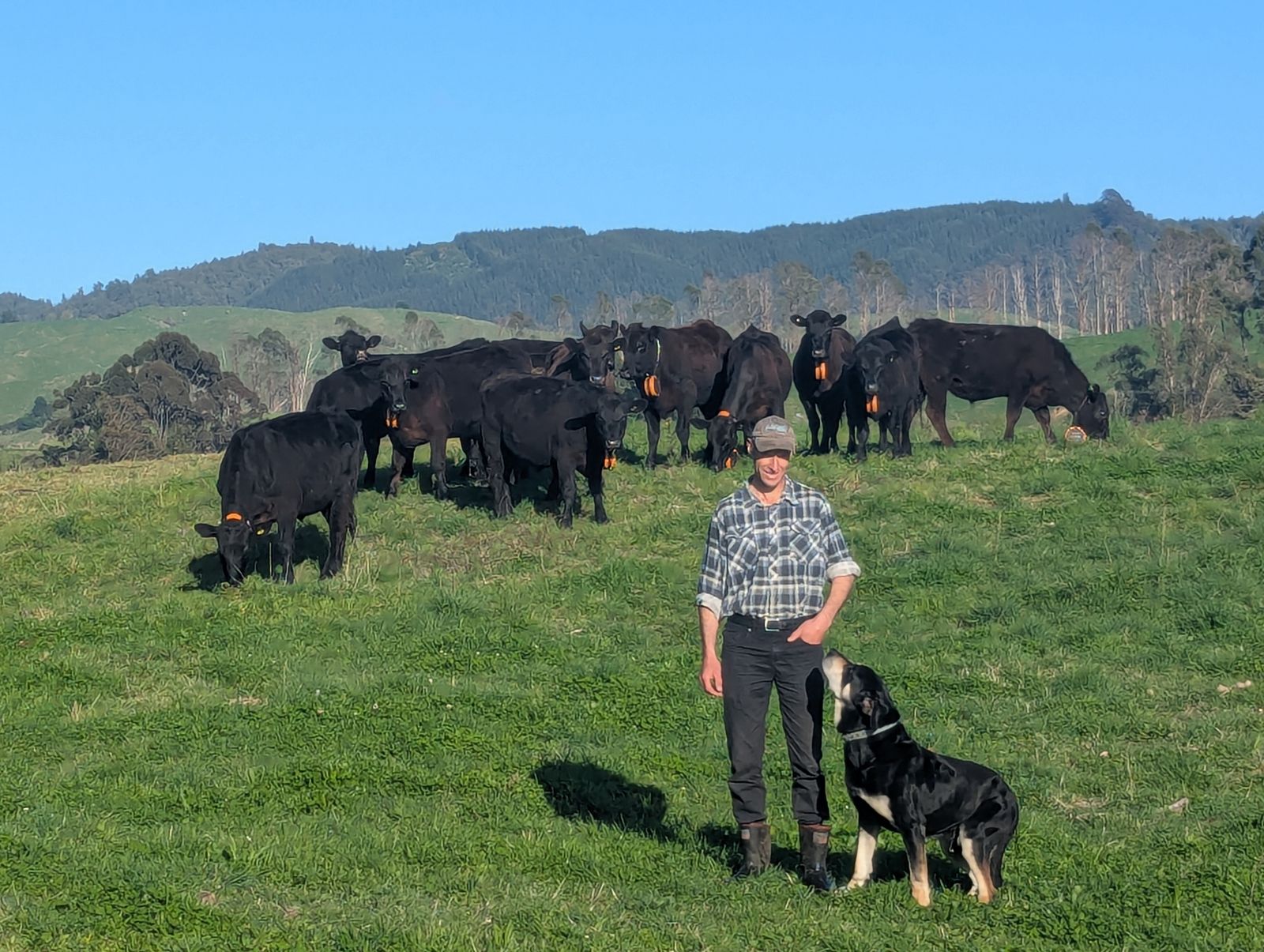
As a one-man operation managing multiple properties, Graham Leaming doesn’t have time to waste. eShepherd is helping him make the most of his time and his grass - proving that virtual fencing technology isn’t just for large-scale operations.
A new approach to an old farming challenge
Graham Leaming was born on the Manawahe farm he now runs, continuing a family farming legacy that spans many years. Across his 60-hectare home block and three additional grazing properties, Graham runs around 70–80 Angus breeding cows and a few hundred sheep; he aims to finish all of their progeny.
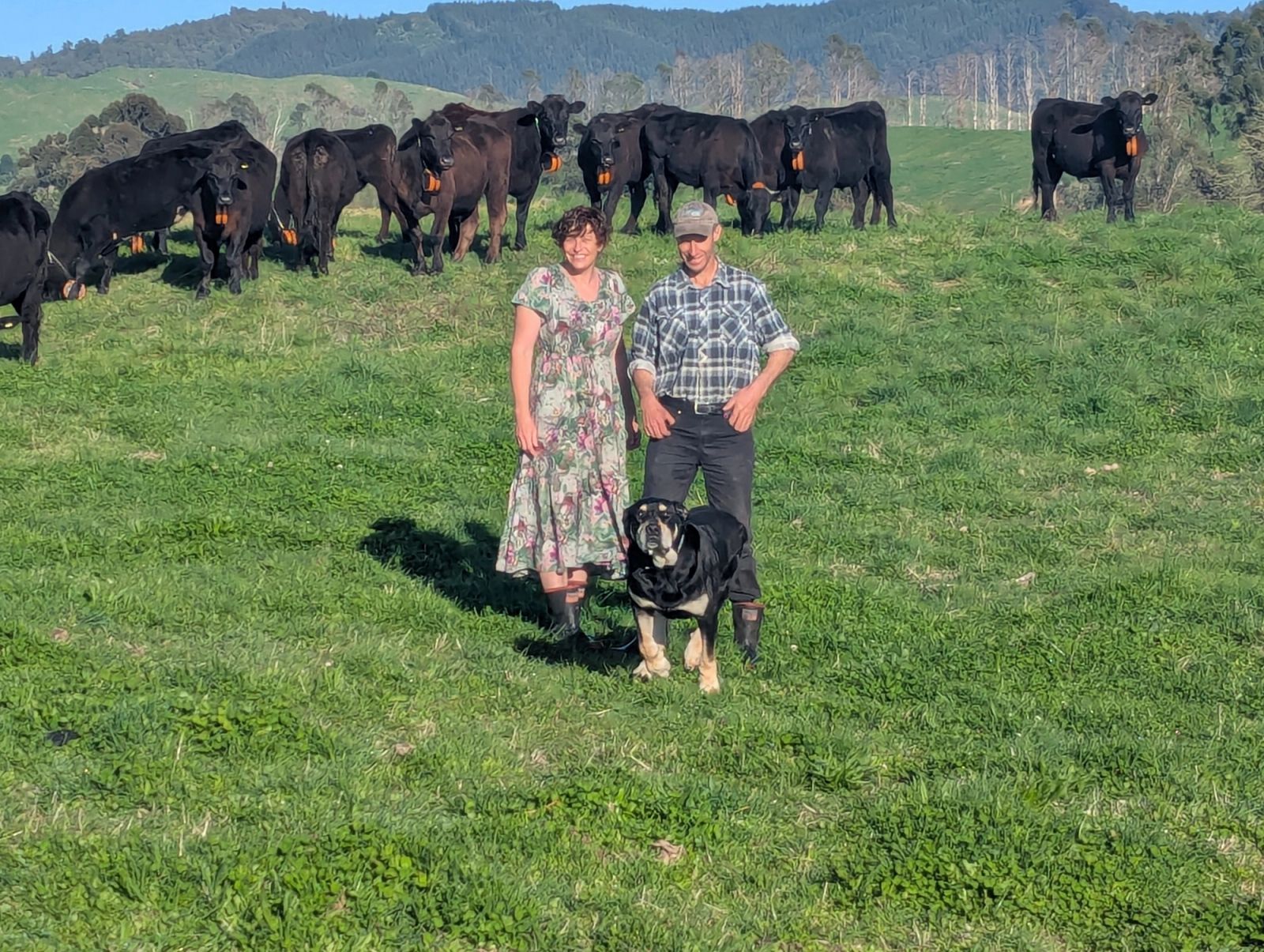
He was introduced to eShepherd through his wife, Byrdie, who added them to the list of sites to visit at Fieldays two years ago.
“It’s mostly just me and my trusty Huntaway, Ned, running things. I thought it might be a way of keeping the job fun and being able to use some technology that my father would’ve only dreamed of.”
Initially, he saw virtual fencing as a way to solve some practical problems on farm, like the deer fencing on his home block, which wasn’t ideal for cattle.
“The cattle would lean on the fences and destroy them, so I thought it could be a fix there and be useful for the pockets of bush around the place that I wanted to exclude stock from.”
With no additional infrastructure needed, Graham was soon sold on eShepherd.
Smarter grazing management
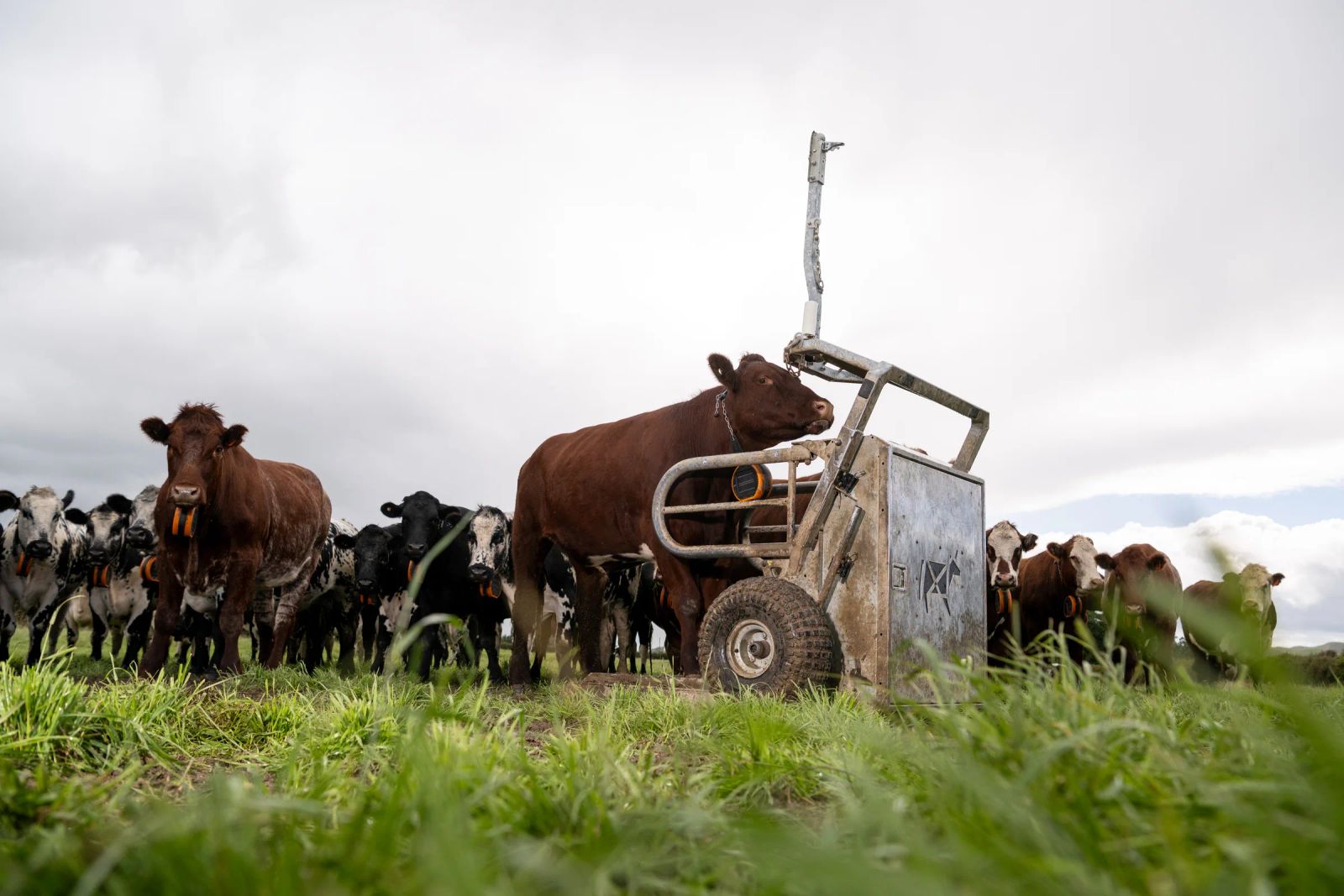
Graham currently has 60 neckbands and uses them on his grazing blocks rather than his home block. This means he can manage breaks remotely, saving valuable time travelling the hour-long round trip every time a break needs moving.
“When you’re a one-man band, every time you have to move a fence and back fence, it takes time. So, you end up not doing it as often as you should.”
Previously, the cattle would get a fresh break every three days. Now, he sets up planned breaks a week ahead and schedules them, so stock get shifted twice a day.
“I still have to go there and check on them but not as often and make sure the allocated area of grass is enough, but I’m saving time not having to shift breaks. With eShepherd it’s just easy: draw a line on the computer screen.”
Virtual fencing also gives Graham the flexibility to respond when conditions change. His Edgecumbe block has heavy, wet soils, so careful grazing management is essential to avoid pugging and protect pasture quality.
“I hear the rain and can move the break if I think they’re muddying it up without needing to go out and trudge through the mud.”
More options, not more cost
Virtual fencing has also provided a practical way to make use of a smaller block where permanent internal fencing simply wouldn’t make sense. One 16-acre grazing block he owns was previously used for growing pine trees. While the land is being improved, it carries a small herd of cattle, making the cost of installing internal fencing difficult to justify.
“I haven’t had to spend money on internal fences or electric outriggers, and with the virtual fencing I can slice it up however I need to, which just gives me more options really. I’ve been surprised that I could finish animals on that particular block actually.”
He’s noticed improvements in liveweight gains and says finishing times are certainly quicker than they were.
“They’re constantly getting fresh feed in front of them.”
He is gradually adding more neckbands and looking at how he can leverage virtual fencing to optimise his finishing operation further.
“The calves normally stay on the cows a long time. They calve in August and are on cows until early May, so if they could be getting preferential grass ahead of the cows and boost those weaning weights, that would be a win.”
Technology for any farm
The beauty of eShepherd for Graham is that he can move it between any of his four properties, using it wherever it’s needed. It’s also acted as a gateway technology, with a drone now used to help check on stock during lambing and calving on the home block.
“Historically I’m not an early adopter of technology, but maybe now I am! I think virtual fencing has certainly got me to embrace technology on farm more.”
Introducing this sort of technology on farm is something he reckons his father would have been excited about too.
“At 77 years old, Dad was out there shifting breaks just like he’d done his whole life and just like I grew up doing. He passed away a few months before we started hearing about eShepherd and got on board. I think he would’ve loved this piece of technology.”